What a cenote is, and the three kinds you will see
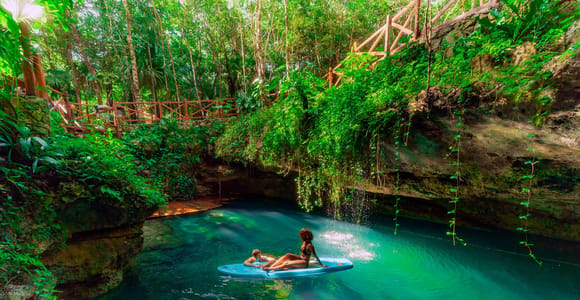
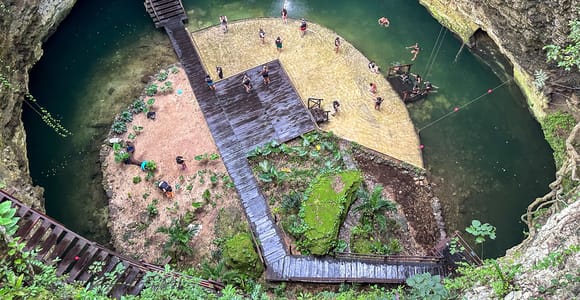
A cenote is a sinkhole in the limestone of the Yucatán Peninsula, filled with fresh groundwater. There are no rivers on the surface here; the water runs underground, and a cenote is a place where you can reach it. Tours describe them by how open they are:
| Type |
What it looks like |
What swimming is like |
Good for |
| Open |
A round pool under the sky, often with trees around the edge |
Daylight, warmer air, easy entry by stairs or a platform |
Families, photos, jumping |
| Semi-open |
A cave with a partly collapsed roof; light enters through a hole |
Shafts of sunlight on the water, cooler |
Snorkeling, photos |
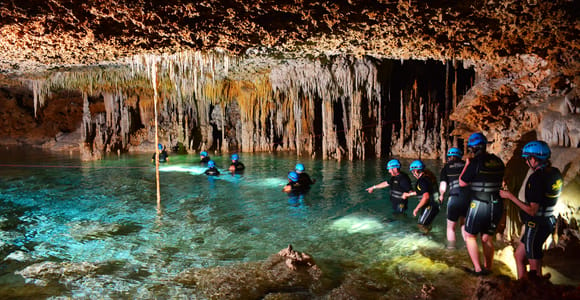
| Cave (cavern) |
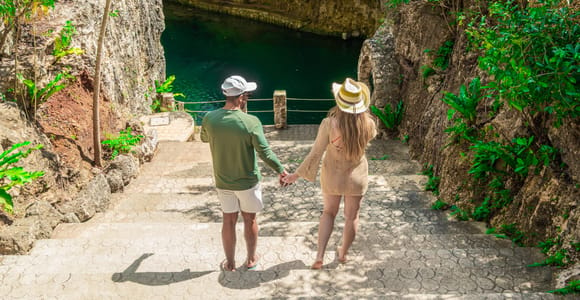
Underground, reached by stairs or a ladder |
Dim, cool, stalactites overhead |
Confident swimmers |
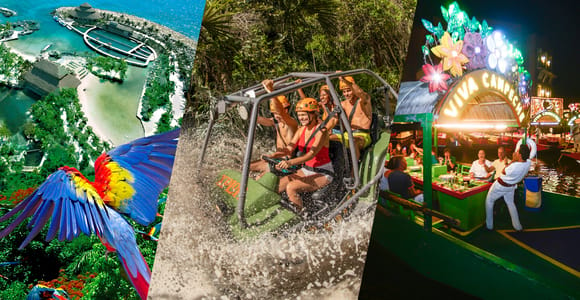
Grupo Xcaret's Xenotes tour adds a fourth category, which it calls an "ancient" cenote. Whatever the type, water is fresh and clear, and life vests are normal on tours.
Where the cenote tours go
| Area |
Time from the Hotel Zone |
Typical tour length |
Cenotes you may see |
Also on the day |
| Ruta de los Cenotes (Puerto Morelos) |
≈ 1 h 20 min to km 18 |
5–6.5 h |
Siete Bocas, Kin Ha, La Noria, Las Mojarras, Verde Lucero, Zapote |
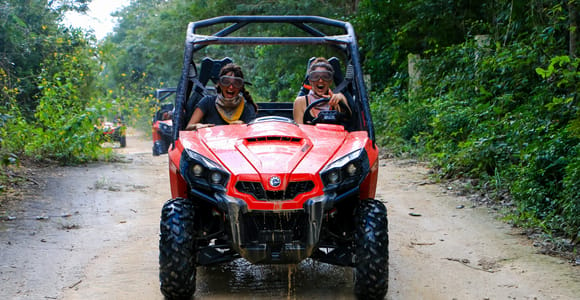
Ziplines, jumps, ATVs, tequila tasting |
| Tulum area |
Further south, past Playa del Carmen |
8–10 h |
Mariposa, Chen-Ha, and others named per tour |
Tulum ruins, Akumal turtles |
| Chichén Itzá and Valladolid |
Inland, in Yucatán state |
≈ 12 h |
Ik Kil, Chichikan and others near Valladolid |
Chichén Itzá, Valladolid |
| Xenotes (Grupo Xcaret) |
Hotel pickup included |
≈ 9 h with transfers |
Four cenotes of different types |
A different activity in each cenote |
| Río Secreto |
Near Playa del Carmen |
Varies by ticket |
An underground river in a cave |
Guided visit with a shower first |
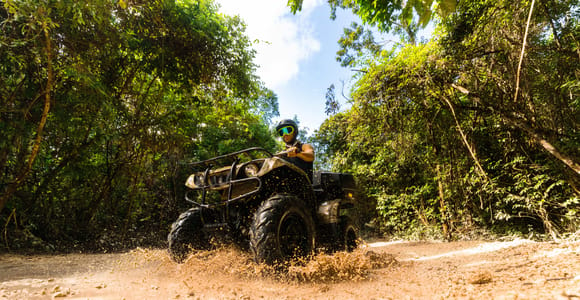
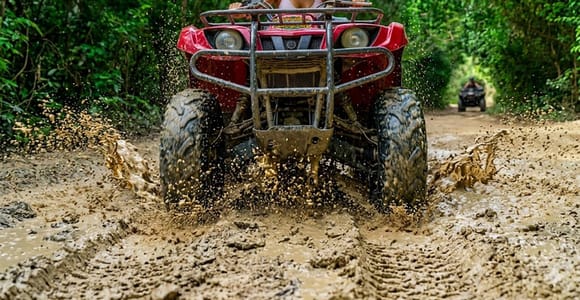
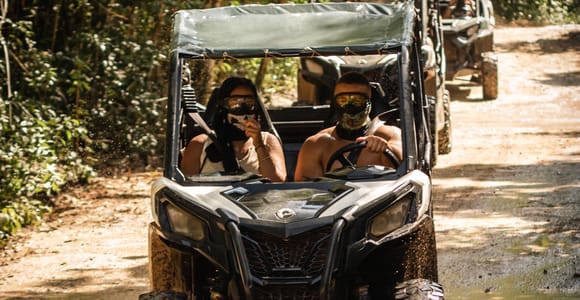
The Ruta de los Cenotes is the road from Puerto Morelos toward Leona Vicario. Quintana Roo's tourism board says it has dozens of cenotes of all three types, and most cenote and ATV tours from Cancún stop here because it is the shortest drive.
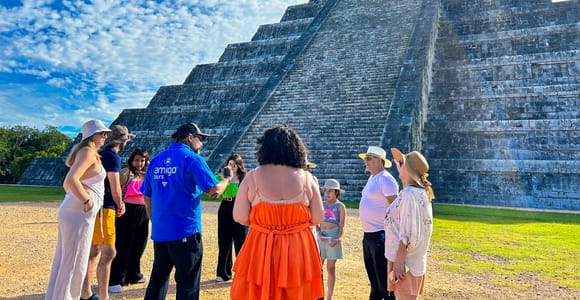
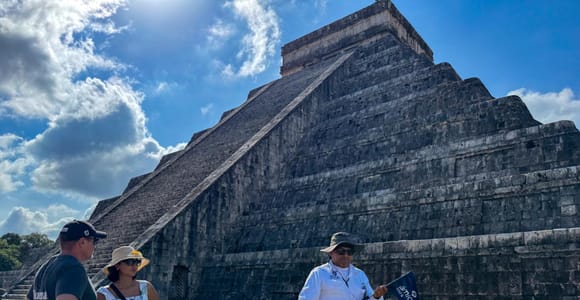
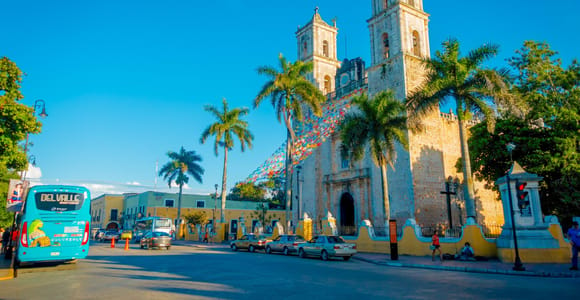
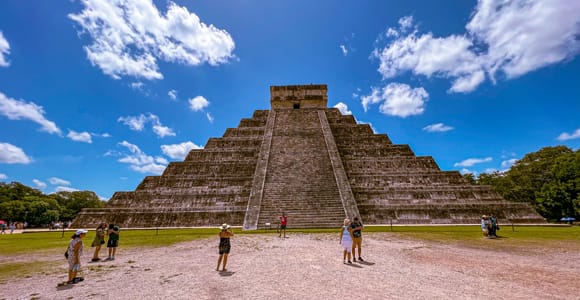
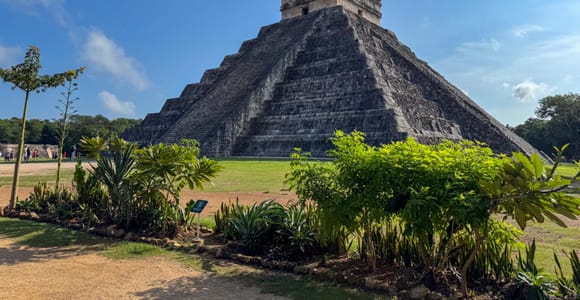
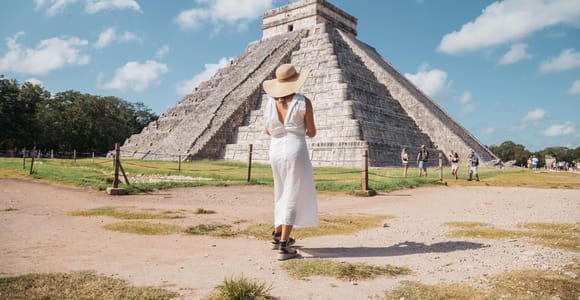
Near Chichén Itzá, Ik Kil is the best-known cenote: a deep, round open cenote a short drive from the ruins. Day trips also use other cenotes near Valladolid, so read which one your tour names. These are long days, and the cenote is usually a short swim after the ruins.
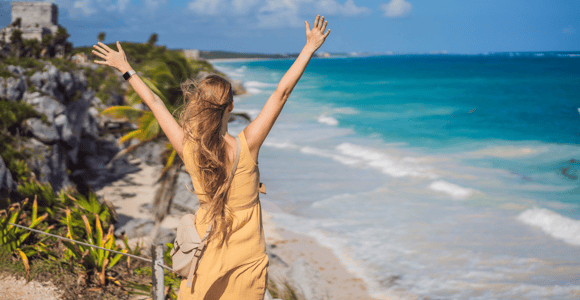
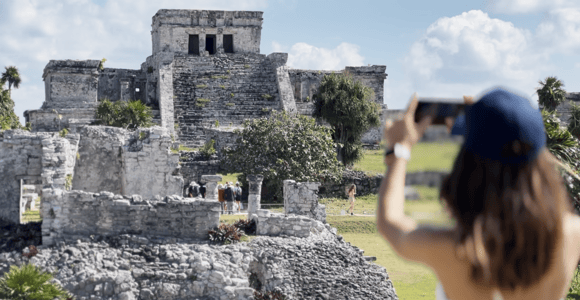
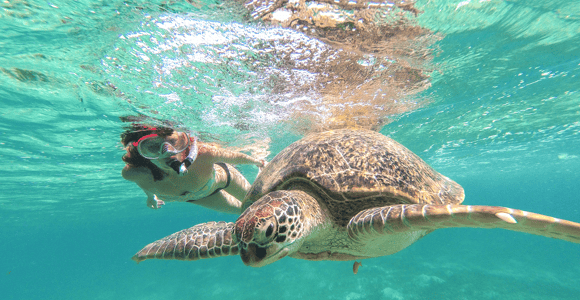
Near Tulum, the sea and the ruins draw most visitors, and the cenotes are an add-on. The tours on this page name Mariposa and Chen-Ha, and some add Akumal for turtles.
Sunscreen, showers and other rules
Rules come from each cenote or park, and they are enforced at the entrance:
- Sunscreen. Grupo Xcaret's parks, including Xenotes and Xel-Há, allow only sunscreen with titanium oxide and zinc oxide. Smaller cenotes post their own rules, and some do not allow any sunscreen. Putting it on after the swim avoids the question.
- Shower first. Río Secreto asks every visitor to shower before entering the cave, to remove lotions, makeup and hair gel. Expect a rinse at many other cenotes too.
- Life vests. Often required, and sometimes rented on site rather than included. Some Chichén Itzá listings show the vest as a cash extra.
- Lockers and phones. Lockers may cost a refundable deposit. Bring a waterproof phone pouch if you want photos.
How to choose your tour
Pick the Ruta de los Cenotes if swimming is the point and you want to be back by mid-afternoon. Pick Tulum if you want a cenote with the sea-view ruins. Pick Chichén Itzá only if you want the ruins most; the cenote will be a short stop at the end of a long day. Choose a tour with pickup from your hotel area, and check whether lunch is a meal or a snack.