Cancún weather month by month
Cancún is warm all year. What changes is the rain, the wind and what is happening in the sea. The figures below are 1991–2020 averages for the Cancún weather station of Mexico's National Weather Service (SMN), with sea temperatures from NOAA, as published by Quintana Roo's tourism board. Treat them as typical values, not forecasts.
| Month |
High / low |
Rain |
Sea |
Good for, watch out for |
| Jan |
84 / 68 °F (29 / 20 °C) |
4.1 in, ≈ 11 days |
80 °F |
Ruins in cool weather; nortes can stop boats; sailfish season |
| Feb |
86 / 69 °F (30 / 21 °C) |
2.3 in, ≈ 7 days |
80 °F |
Drier; nortes still possible |
| Mar |
89 / 71 °F (32 / 21 °C) |
1.5 in, ≈ 5 days |
80 °F |
One of the two driest months; spring break crowds |
| Apr |
92 / 73 °F (33 / 23 °C) |
1.7 in, ≈ 4 days |
81 °F |
Fewest rain days; sargassum season can begin |
| May |
94 / 76 °F (34 / 24 °C) |
3.4 in, ≈ 8 days |
82 °F |
Rainy season starts; whale shark season opens |
| Jun |
93 / 77 °F (34 / 25 °C) |
7.3 in, ≈ 12 days |
83 °F |
Hurricane season from June 1; whale sharks |
| Jul |
95 / 77 °F (35 / 25 °C) |
2.6 in, ≈ 9 days |
84 °F |
Hot; Mexican school holidays; whale sharks |
| Aug |
95 / 77 °F (35 / 25 °C) |
4.0 in, ≈ 12 days |
84 °F |
Warm sea; hurricane activity rises from mid-August |
| Sep |
94 / 76 °F (34 / 25 °C) |
7.1 in, ≈ 15 days |
85 °F |
Hurricane peak; last whale shark weeks |
| Oct |
90 / 75 °F (32 / 24 °C) |
10.9 in, ≈ 18 days |
84 °F |
Wettest month; first nortes |
| Nov |
87 / 72 °F (30 / 22 °C) |
5.2 in, ≈ 13 days |
82 °F |
Rain eases; hurricane season ends November 30 |
| Dec |
85 / 70 °F (29 / 21 °C) |
3.8 in, ≈ 12 days |
81 °F |
Holiday peak; nortes; good for long day trips |
Rain in Cancún usually comes as showers with sun in between, as the tourism board puts it, so a "rain day" often does not mean a lost day. The real planning issues are wind for boat trips, storms in late summer and autumn, and seaweed on some beaches.
Boat tours and excursions: wind matters more than rain
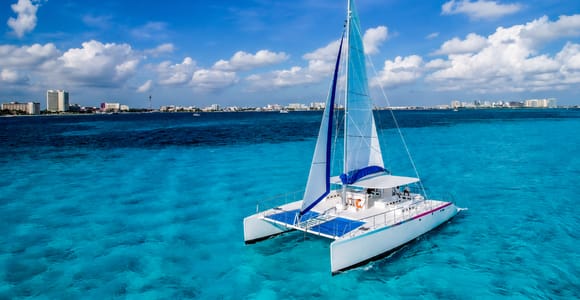
For boat tours, catamarans and snorkeling, the sea state decides whether a trip goes out. Two seasons matter:
| Season |
Months |
What it does to trips |
| Nortes (cold fronts) |
October to April |
Wind, clouds and waves for a few days. With strong wind the Port Captain can close navigation for small boats and sometimes the crossings to the islands |
| Hurricane season |
June 1 to November 30 |
Most days are normal. Storms are forecast days ahead; most activity falls between mid-August and mid-October, with the peak around September 10 |
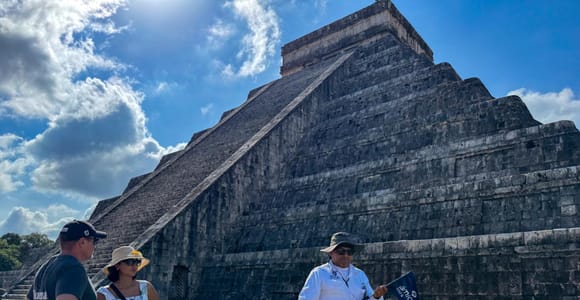
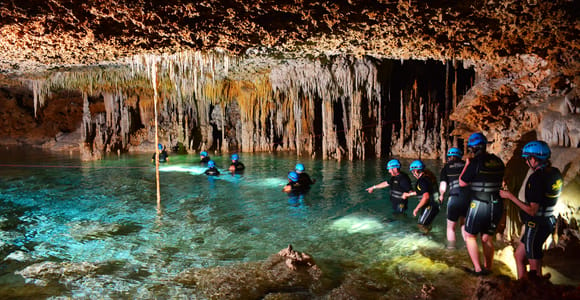
The tourism board's own advice is practical: if your plan depends on the sea, confirm with your operator the day before and keep a free day in your itinerary. Book the boat day early in your stay, so a cancelled trip can move. Inland trips such as Chichén Itzá, cenotes and Río Secreto are not affected by wind.
In hurricane season, take travel insurance and follow Quintana Roo Civil Protection and the National Weather Service. Mexico has an early warning system for tropical cyclones that shows by color how close a storm is.
Sargassum: the seaweed season
Sargassum is a floating seaweed that drifts in from the Atlantic. Its season usually runs from April to October, with most of it between May and August, and it varies a lot from year to year and from beach to beach. The Mexican Navy (SEMAR) collects it at sea, beaches are cleaned, and the Navy's oceanographic institute publishes a daily traffic-light map by zone.
If seaweed worries you, plan around the sea instead of avoiding the season. Beaches facing west or north usually get less, such as Playa Norte on Isla Mujeres, the west coast of Cozumel and Holbox. Cenotes, Mayan ruins and the Bacalar lagoon do not depend on the sea at all.
Wildlife seasons
| What |
When |
Where |
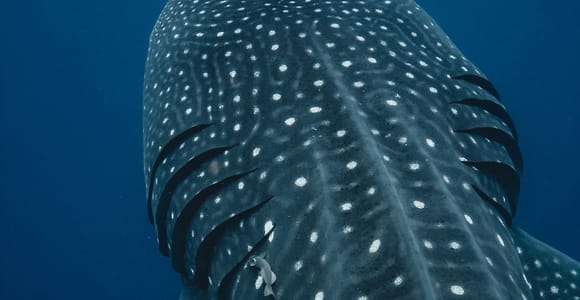
| Whale sharks |
May to September |
Open sea between Isla Mujeres and Holbox |
| Sailfish |
December to March |
Off Isla Mujeres |
| Bull sharks |
Return in November |
Off Playa del Carmen |
| Flamingos |
April to October |
Holbox and the Yum Balam area |
Whale shark trips are the one big activity with a fixed season. If swimming with them is the reason for your trip, book well ahead and keep a spare day, because the boats go far out and depend on the sea.
Crowds and holidays
The busiest periods in Cancún are the Christmas and New Year weeks, US spring break in March, Easter week (Semana Santa) and the Mexican school holidays in July and August. Tours fill up and prices rise at these times, so book popular trips such as whale sharks, Chichén Itzá early access and Coco Bongo in advance. Coco Bongo holds separate New Year's Eve events, and its FAQ says tickets often sell out in high season.
Outside those periods there is more room on tours. In September and October you trade more rain and storm risk for that space.
Things to do in Cancún by season
- December to February: the coolest days, ideal for Chichén Itzá, Cobá, Valladolid and cenote routes. Boat trips run on calm days; sailfish season starts. Pack a light sweater for windy evenings.
- March to May: the driest weeks and the best time for Isla Mujeres, Isla Contoy and snorkeling. From May, the whale shark season opens and sargassum can appear.
- June to August: hot, with warm water and whale sharks. Start early: early-access ruins tours and cenotes beat the midday heat.
- September to November: the wettest and stormiest months, with fewer crowds. Keep plans flexible, favor inland trips, and see rainy-day ideas. In early November, Maya communities prepare Janal Pixán, their Day of the Dead.